Aurora forecast / January
Northern lights in Iceland in January
One of the best months, if the weather cooperates.
January gives you the longest nights of the aurora season and a genuinely dark sky from mid-afternoon onwards. The trade-off is weather: this is peak storm season, roads close at short notice, and long stretches of overcast are common. Plan several nights rather than one, and stay somewhere you can drive out of if the cloud sits over your valley.
How dark does it get in January?
- Reykjavík: 14 hours dark enough for aurora
- Akureyri: 14.5 hours dark enough for aurora
Measured on the 15th of the month — the hours the sun sits far enough below the horizon for aurora to be visible.
What January has actually done
Averaged over 20 years (2006-2025), a typical January gives 59.3 hours of clear dark sky — 13.5% of its 437.8 dark hours. Mean geomagnetic activity for the month is Kp 1.5.
Clearest in January: Kirkjubæjarklaustur (91.5 h), Skaftafell (79.5 h), Hella (76 h).
Cloud measured by reanalysis and corrected against Icelandic weather stations; Kp from GFZ Potsdam. How every month compares.
Roads and access in January
Ring road normally open but subject to closures; mountain passes and all F-roads shut. Check road.is daily.
What else is happening
Ice caves are at their most accessible, and the low sun makes for long golden light through the middle of the day.
Every month
January · February · March · April · May · June · July · August · September · October · November · December
Tonight's aurora forecast · Iceland weather map
Somewhere to be while you wait for the month
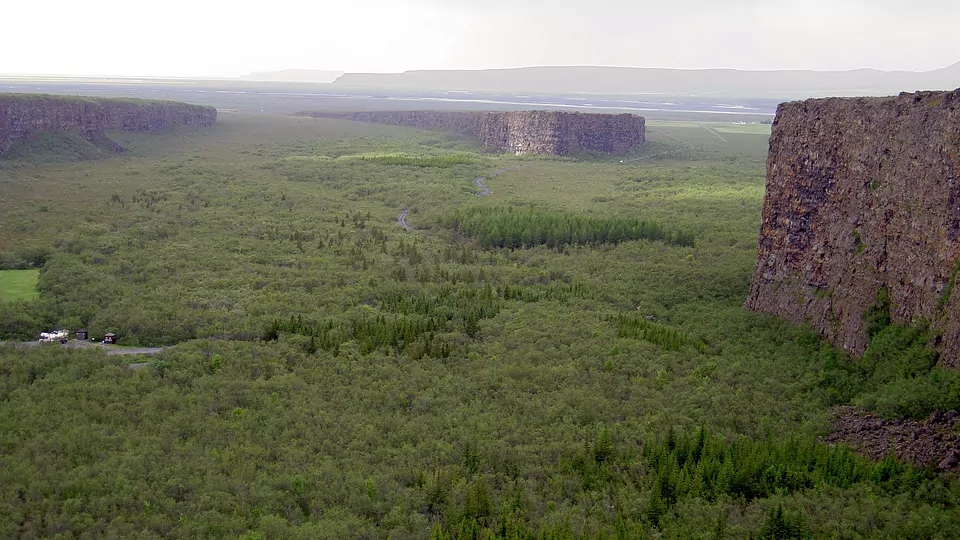
Step inside Asbyrgi — narrated, and dark enough for the lights when the sky clears.