Solheimasandur Plane Wreck: The history and reality of Iceland's famous aviation relic
Solheimasandur Plane Wreck
Weather
Local Time
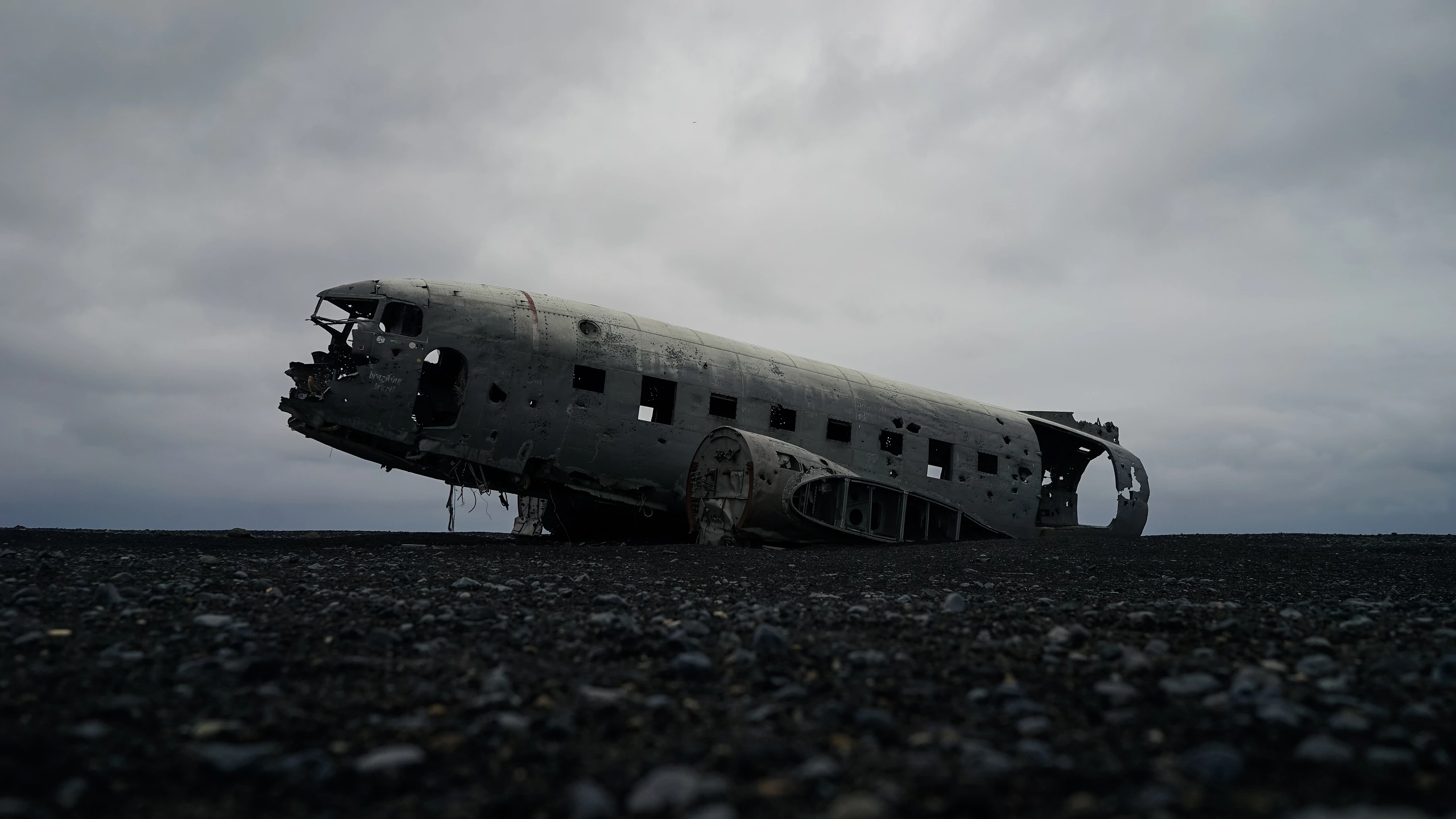
Beyond the popular photos lies a story of survival, a case of mistaken identity, and a long walk across a stark volcanic desert.
The Sólheimasandur plane wreck is one of Iceland's most hauntingly beautiful and surreal landmarks. Resting on a vast expanse of black volcanic sand, the skeletal remains of this military transport aircraft create a post-apocalyptic scene that has captured the global imagination. While it is a staple of Instagram feeds and music videos, the true story of its presence is often obscured by myth and modern tourism.
The Dramatic Origin Story
The story began on November 21, 1973, when a U.S. Navy aircraft was flying from Höfn to Keflavík. Contrary to the widely cited date of November 24, contemporary Icelandic newspaper reports confirm the crash actually occurred three days earlier.
Go Campers
Go Campers
+1
As the plane flew over the south coast, it encountered severe weather, including plummeting temperatures and heavy icing on the wings. With the engines failing and visibility near zero, the crew believed they were heading directly toward a mountain. In a split-second decision, the young co-pilot, Gregory Fletcher, opted to turn south toward the ocean, hoping a water landing would offer a better chance of survival.
As they descended, the crew saw what looked like "some goddam thing that looked like the moon"—a perfectly flat, frozen black sand beach. Fletcher managed to land the plane parallel to the shore, skidding across the dunes and coming to a stop just six meters (20 feet) from the Atlantic Ocean. Incredibly, all crew members walked away unharmed, with one describing it as "the most comfortable landing I have ever been in".
What People Often Comment About
The "Dakota" or "DC-3" Identity: Almost every visitor and blog refers to the wreck as a Douglas DC-3 or a "Dakota".
The Surreal Landscape: Many remark that the site feels "lunar" or "otherworldly," a feeling amplified by the lack of landmarks on the surrounding 4-kilometer sand plain.
The Pop Culture Connection: It is frequently cited as the location for Justin Bieber’s "I’ll Show You" music video, the Bollywood film Dilwale, and appearances by the Icelandic band Sigur Rós.
The Long Walk: The hike from the parking lot is a common topic of conversation, often described as a "boring" or "monotonous" hour-long walk across a flat desert.
Arctic Adventures
Arctic Adventures
+6
What is True, But Not Often Mentioned
It’s Not Actually a DC-3: One of the most persistent misconceptions is the plane's model. It is actually a Douglas C-117D, a converted Super DC-3 with a longer fuselage and more powerful engines.
A Case of Human Error: While weather played a role, many sources indicate the crash was exacerbated by human error. It is reported that the pilot inadvertently switched to an empty fuel tank, causing the engines to starve for fuel while there was still plenty in the other tanks.
The Missing Parts: The plane looks like a hollow shell because it was systematically stripped. After the crash, the U.S. Navy salvaged all valuable equipment, including the engines and interior. Later, a local farmer reportedly cut off the tail to sell it.
The Raven’s Nest: For decades before it was a tourist hotspot, the wreck was largely ignored by locals and served as a massive raven's nest in the cockpit.
Go Campers
Go Campers
+8
Surprising Realities
The Wreck is Moving (Slowly): Due to the high risk of glacial flooding (jökulhlaups) in the Katla Geopark, experts estimate that the wreck may eventually be washed into the ocean.
More Dangerous Than the Crash: The crash itself claimed zero lives, but the location has claimed the lives of tourists who have succumbed to hypothermia while attempting the walk in bad weather.
It Used to be a Drive-In: Until 2016, visitors could drive their 4x4 vehicles directly to the plane. Access was banned to protect the fragile volcanic soil and prevent tourists from getting stuck in the soft sand.
It Was Almost Repaired: The Navy abandoned the wreck not just because of the remote location, but because the C-117 was already being phased out of service, making recovery uneconomical.
Arctic Adventures
Arctic Adventures
+5
Visitor Tips & Safety
Transportation: Most visitors hike the 4 km (2.5 miles) one-way path, but a paid shuttle bus operates during the day for those who want to skip the walk.
Weather Warning: Do not attempt the walk in strong winds or fog. The flat plain provides no shelter, and visibility can drop to zero instantly, making it impossible to find your way back to the road.
Prohibited Actions: Climbing on the wreck is strictly prohibited to prevent further damage to the structural integrity and for personal safety.
Sólheimasandur is a sand desert formed by jökulhlaup, or glacial outburst floods, from the Katla volcano system that lies underneath the Mýrdalsjökull glacier. In 1973 a DC-3 US Navy plane ran out of fuel and landed on the beach of Sólheimasandur. Everyone survived the landing; the plane wreck is still there and has become a popular site. Driving to the plane wreck is forbidden, but by the main road #1, there is a good parking place, and possible to walk from there to the site. Each way takes a little less than an hour to walk. Note: In wintertime, there is a lack of daylight, and the weather can change quickly. It is easy to get lost in the area, so people are advised to know the weather forecast and have enough daylight for the walk.
Where to go next
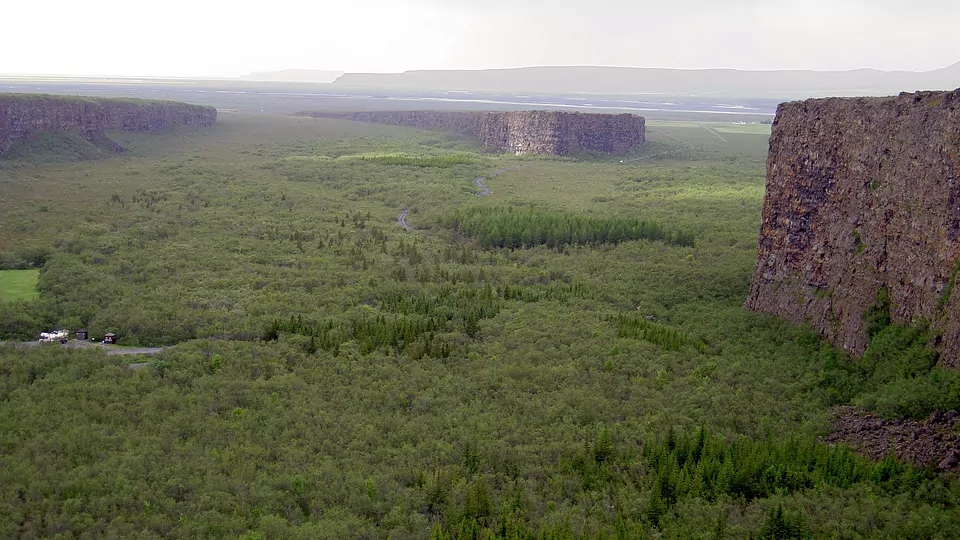
Next: Asbyrgi — narrated, and free to walk into.