Fjallsarlon: A logistics-focused guide to the intimate glacier lagoon of the south
Fjallsarlon
Weather
Local Time
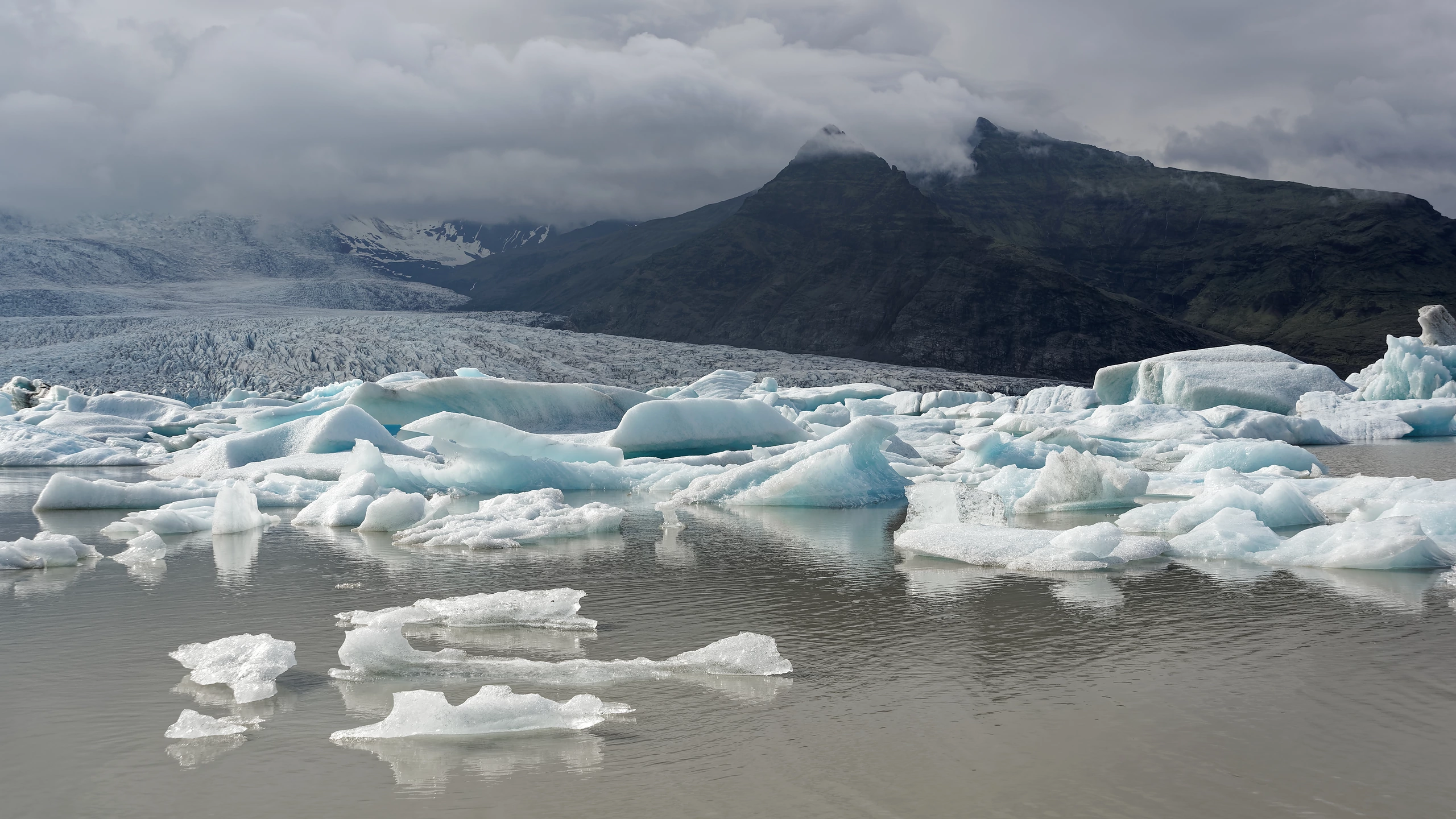
Located just 10 kilometers west of its famous neighbor, Fjallsarlon offers a more contained and quieter encounter with the calving ice of the Vatnajokull ice cap.
Scenic Fjallsárlón is a glacial lagoon largely within Vatnajökull National Park located around 10 km. west of Jökulsárlón, at the southern edge of Vatnajökull glacier. With the steep glacier tongue, Fjallsjökull coming down from Vatnajökull and all the way into the lagoon makes it a perfectly peaceful place for photos as well as enjoying the untouched nature. Fjallsárlón also offers boat tours on the lagoon as well as a bistro with fresh and tasty refreshments.
Fjallsárlón, the "Glacier Lagoon of the Mountain River," is a stunning glacial lake in Southeast Iceland that often plays a quiet supporting role to its more famous neighbor, Jökulsárlón. Yet, for those who turn off the Ring Road at the red Fjallsárlón sign, it offers a markedly different, more intimate encounter with Iceland’s shifting ice. Located at the foot of the Fjallsjökull glacier tongue—an outlet of the massive Vatnajökull ice cap—it is a place of dramatic beauty, geological volatility, and surprising historical depth.
Guide to Iceland
Guide to Iceland
+4
The Modern "Alpine Oasis"
Travelers arriving at Fjallsárlón typically encounter a landscape that feels significantly more contained than the sprawling expanse of Jökulsárlón. The lagoon is about 5 square kilometers in size and serves as the fourth deepest lake in Iceland, with depths reaching 130 meters.
Fjallsárlón Glacier Lagoon
Fjallsárlón Glacier Lagoon
+3
The visual anchor of the lagoon is Miðaftanstindur, a distinctive triangular mountain peak that towers over the water. Its name translates roughly to "Mid-afternoon Peak," and its sharp geometry provides a perfect contrast to the jagged, blue-streaked ice of the glacier snout that appears to plunge directly into the lagoon.
Fjallsárlón Glacier Lagoon
Fjallsárlón Glacier Lagoon
+4
What People Often Comment About
Traveler reviews and social media comments about Fjallsárlón almost universally touch upon three main themes: its tranquility, its intimacy, and the brownish water.
The "Lesser-Known" Vibe: Most visitors comment on the relative lack of crowds. While Jökulsárlón can feel like a busy transit hub for tour buses, Fjallsárlón is frequently described as a "hidden gem" or a place where "time slows down".
Proximity to the Glacier: Because the lagoon is smaller, the massive wall of the Fjallsjökull glacier feels much closer than the ice at Jökulsárlón. People often remark that they can see the crevasses and icefalls with the naked eye from the shore without needing a boat ride.
The "Murky" Water: Unlike the clear, brackish blue of Jökulsárlón, visitors often note that Fjallsárlón’s water is siltier and can appear brownish or gray. This is a frequent point of comparison in travel forums, where people wonder if they are "missing out" on the bright blue water seen elsewhere.
What is True, But Not Often Mentioned
Beyond the typical travel tips, there are several factual aspects of Fjallsárlón that are surprisingly overlooked by the general public.
1. The "Ghost" Forests Beneath the Ice
One of the most remarkable but rarely discussed facts is that Fjallsárlón is a very young landscape. When Iceland was settled in the 9th century, this area was not ice; it was a broad forest called Breiðamörk.
Fjallsárlón Glacier Lagoon
Fjallsárlón Glacier Lagoon
+3
The Farm that Disappeared: There was once a farm called Fjall in the very spot where the lagoon now sits.
Frozen Logs: During the Little Ice Age (c. 1300–1900), the glacier advanced and completely buried the forest and the farm. Today, after heavy rainfall or significant melting, tour guides occasionally fish pieces of ancient trees out of the lagoon—preserved wood from a forest that hasn't seen the sun in centuries.
Fjallsárlón Glacier Lagoon
Fjallsárlón Glacier Lagoon
+1
2. It is a Freshwater Lake, Not a Sea Lagoon
While both are called "lagoons," Fjallsárlón and Jökulsárlón are hydrologically different.
No Tides: Jökulsárlón is connected to the ocean, meaning seawater flows in and out with the tides. Fjallsárlón has no direct connection to the sea.
The Winter Freeze: Because it is entirely freshwater, Fjallsárlón frequently freezes over in winter, turning into a solid, snow-covered plain of icebergs. Jökulsárlón, due to its salt content, almost never freezes.
Fjallsárlón Glacier Lagoon
Fjallsárlón Glacier Lagoon
+5
3. The "Heart" in the Glacier
Locals and keen-eyed observers often point out a surprising natural feature: a distinct heart shape formed by the crevasses and ridges in the center of the Fjallsjökull glacier. This feature has become a unofficial symbol for the lagoon, and many use it to distinguish photos of Fjallsárlón from Jökulsárlón, where the two are often misidentified in media.
Fjallsárlón Glacier Lagoon
Fjallsárlón Glacier Lagoon
+1
4. A "Pop Culture" Iceberg Stage
While many know Jökulsárlón from James Bond or Lara Croft, Fjallsárlón has its own claim to fame. The Icelandic rock band Kaleo famously recorded the music video for their song "Save Yourself" on a floating iceberg in the middle of Fjallsárlón. This feat required extreme logistical planning to ensure the iceberg didn't flip while the band and their equipment were on top of it.
Fun Iceland
Fun Iceland
+3
The Surprising Volatility of "Silent" Ice
Though it feels peaceful, Fjallsárlón is geologically aggressive.
Rapid Expansion: The lagoon didn't even exist before the 1950s. It grew most rapidly between 2000 and 2015, effectively doubling in size as the glacier retreated into a deep basin carved out during the Little Ice Age.
The "Hairpin" Moraines: To geologists, Fjallsárlón is famous for its "sawtooth" or hairpin-shaped moraines. These are ridges of sediment pushed up by the glacier that show exactly how the ice moved year by year. They are considered some of the most instructive examples of glacial retreat in the world.
Fjallsárlón Glacier Lagoon
Fjallsárlón Glacier Lagoon
+3
Wildlife and the "Diving" Birds
While people look for seals (which do occasionally visit from the sea), the real "owners" of the land are the Great Skuas. These large, aggressive seabirds nest in the cliffs nearby. A fact often omitted from brochures but quickly learned by hikers is that Skuas are fiercely territorial; they will literally dive-bomb anyone who gets too close to their nesting sites during the summer.
Facebook
Facebook
+4
Visiting Details
Access: It is roughly a 10 km drive west of Jökulsárlón.
Activities: Small Zodiac boat tours operate from April to November.
Photography: The best light is typically during the "golden hours" of dawn or dusk when the white ice catches the pinks and purples of the Icelandic sky.
Reddit
Reddit
+3
Fjallsárlón stands as a reminder that what we see as a permanent, timeless landscape is actually a fleeting moment in a story of constant change. It is a place where you can touch ice that fell as snow a thousand years ago, and in the same breath, witness the birth of a lake that didn't exist when your grandparents were children
When is it quietest?
The road past Fjallsarlon is quietest before 09:00 and again after 20:00, carrying under a third of its 15:00 peak — about 3.6× less traffic than mid-afternoon.
Measured at Vegagerðin’s counter Kvísker, 6.6 km away. Hour by hour.
Where to go next
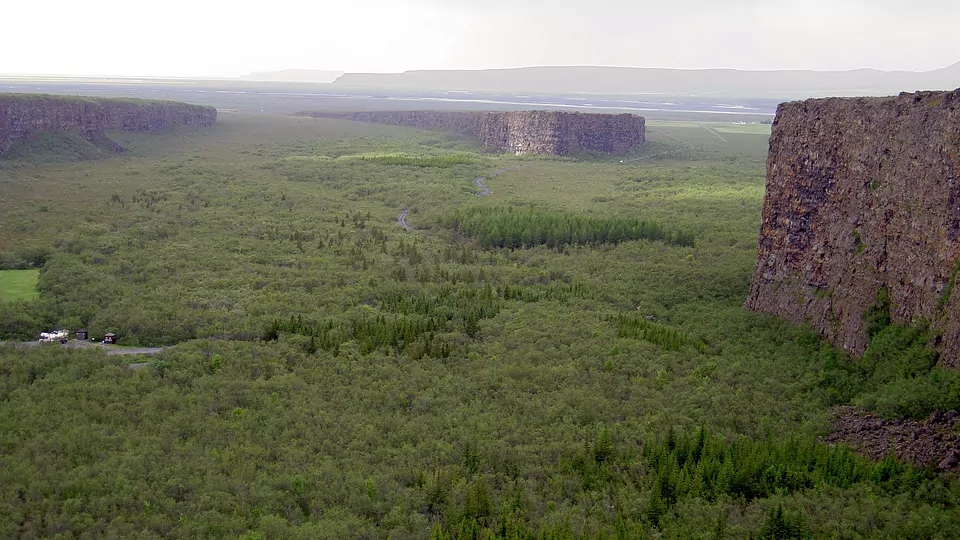
Next: Asbyrgi — narrated, and free to walk into.