Gljufrabui: The sanctuary within the stone
Gljufrabui
Weather
Local Time
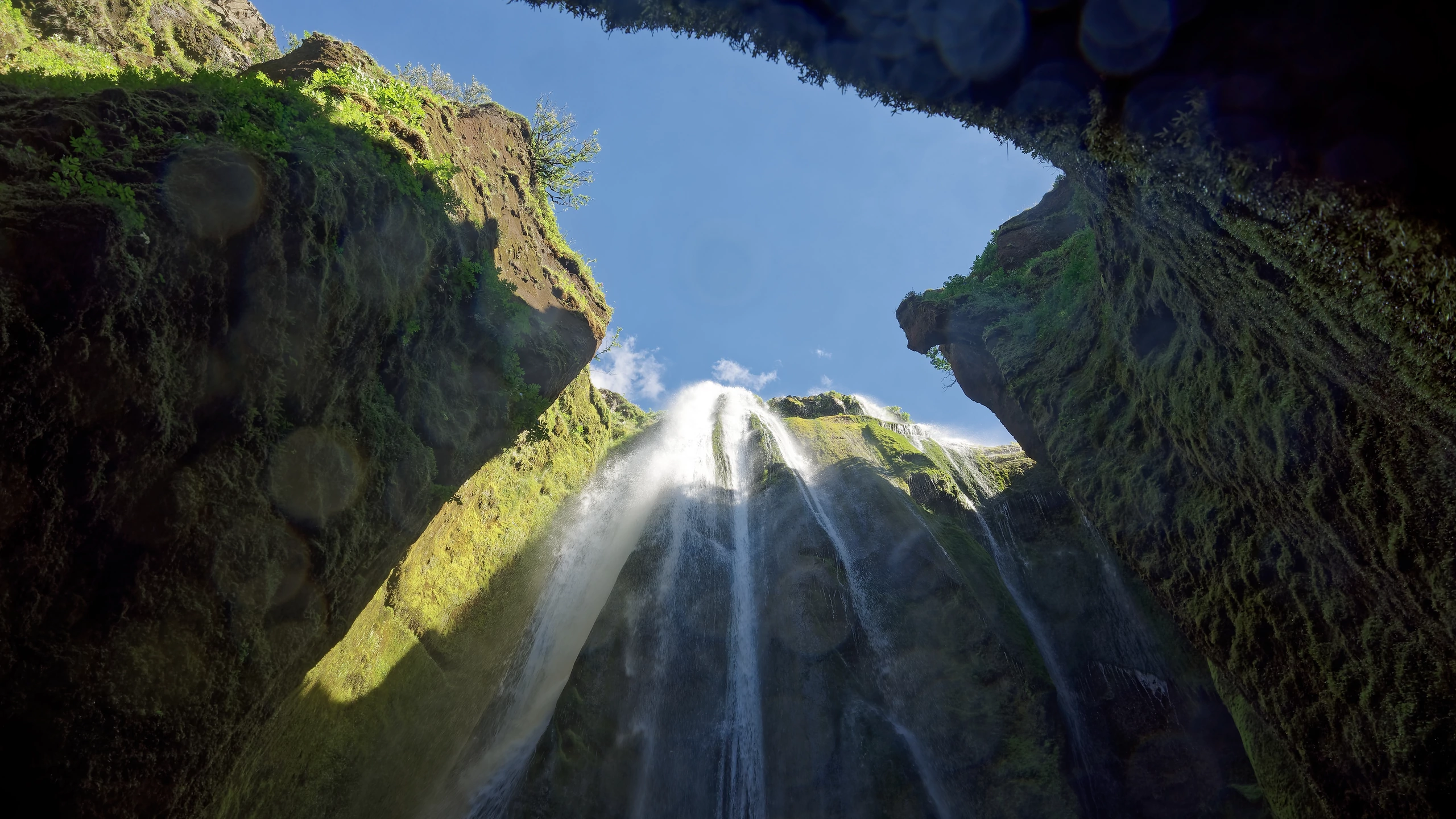
A few hundred meters from the grand theater of Seljalandsfoss lies a waterfall concealed within a narrow canyon, offering a damp, intimate encounter with the raw elements of the South Coast.
Gljúfrabúi, often referred to as the "Hidden Waterfall" or the "Canyon Dweller," is one of Iceland’s most enchanting and mystical natural wonders. While it stands just a few hundred meters away from the world-famous Seljalandsfoss on the South Coast, it offers a completely different experience—one defined by secrecy, intimacy, and a visceral connection to the earth. If Seljalandsfoss is the grand, theatrical stage of the South Coast, Gljúfrabúi is the quiet, sacred sanctuary hidden behind the curtain.
The Geography of the Canyon Dweller
Gljúfrabúi is a 40-meter-tall waterfall that drops into a narrow, vertical cleft in the ancient sea cliffs of the Eyjafjöll mountain range. Geologically, the waterfall is fed by the river Gljúfurá, which originates from the glacial meltwaters of the infamous Eyjafjallajökull volcano.
What makes Gljúfrabúi unique is its enclosure. Over thousands of years, the water has carved a cylindrical chamber into the soft volcanic rock. From the outside, the waterfall is almost entirely invisible; all one sees is a narrow crack in a moss-covered cliff face and a small stream trickling out onto the grass. It is only by venturing through this narrow opening—wading through the shallow river—that the full majesty of the falls is revealed.
The Experience: Entering the Sanctuary
The journey into Gljúfrabúi is a sensory transition. As you step away from the crowded paths of Seljalandsfoss and approach the cliff wall, the sound of the wind is replaced by a low, muffled rumble. To enter, you must balance on stepping stones or wade through several inches of cold glacial water.
Once inside the canyon, the world changes. You find yourself in a soaring, mossy cathedral of rock. Light filters down from the opening at the top, illuminating the mist and spray in a way that feels ethereal, almost holy. The waterfall itself crashes into a deep pool at the center of the chamber, creating a constant, swirling vortex of mist. In the middle of the canyon sits a massive boulder known as Franskanef (The French Nose). Most visitors climb this rock to stand directly in the path of the spray, offering a perspective where the water seems to fall directly from the sky.
The Legend of the Hidden People
Like many of the geographical features in the shadow of Eyjafjallajökull, Gljúfrabúi is steeped in the folklore of the Huldufólk (Hidden People). Local tradition suggests that such a secluded, beautiful place could not be unoccupied. The cave-like atmosphere of the canyon is said to be a dwelling place for these supernatural beings, who value their privacy and the purity of the glacial water. For generations, locals treated the site with a mix of reverence and caution, ensuring that the "Canyon Dweller" remained undisturbed. Today, that sense of mystery persists; even with dozens of tourists visiting daily, the chamber retains an atmosphere of ancient, indwelling spirit.
Photography and the Challenge of Mist
Gljúfrabúi is a dream for photographers, but it is also one of the most challenging locations in Iceland to capture. Because the chamber is enclosed, the air is perpetually saturated with fine mist. Within seconds of entering, a camera lens will be covered in water droplets.
The best shots are often taken from the "French Nose" boulder, looking straight up into the light, or from the entrance of the cleft, capturing the contrast between the dark interior and the bright green landscape outside. The "Golden Hour"—just before sunset—is particularly magical, as the low-angled sun can catch the top of the falls, creating a halo of light that descends into the dark canyon.
Practicalities: The Price of Admission
To visit Gljúfrabúi is to accept that you will get wet. This is not a "dry" attraction.
Gear: Waterproof clothing (pants and jacket) is essential. Even with the best gear, the fine mist tends to find its way into every seam.
Footwear: Waterproof hiking boots are a must. Many visitors try to enter in sneakers, only to end up with soaked feet for the rest of their South Coast journey.
Safety: The rocks inside the canyon are exceptionally slippery due to constant moisture and algae growth. Moving slowly and testing your footing is vital, especially when climbing the central boulder.
The Contrast with Seljalandsfoss
The relationship between Gljúfrabúi and Seljalandsfoss is a study in contrasts. At Seljalandsfoss, the primary thrill is walking behind a wide, powerful curtain of water and looking out at the vast horizon. It is an experience of scale and openness.
At Gljúfrabúi, the experience is one of containment. You are not looking out; you are looking up. You are not a spectator to nature; you are inside it. While Seljalandsfoss is visible from kilometers away on the Ring Road, Gljúfrabúi requires a conscious effort to find. It rewards those who are willing to get their feet wet and step off the beaten path.
The Environmental Impact
Because Gljúfrabúi has seen a surge in popularity in recent years, the delicate moss and the riverbed are under constant pressure. The Icelandic authorities have worked to maintain a balance, keeping the site accessible while protecting the natural integrity of the canyon. Visitors are encouraged to follow the "Leave No Trace" principle, staying within the riverbed and on the rocks to avoid trampling the fragile vegetation that clings to the canyon walls.
Why Gljúfrabúi Stays with You
There is something primal about standing in the heart of a mountain, surrounded by the roar of falling water. In a world that is increasingly mapped and photographed, Gljúfrabúi still feels like a discovery. It is a reminder that some of the most beautiful things in the world are hidden in plain sight, tucked away in the cracks of the earth. It represents the "hidden" Iceland—the one that requires a bit of bravery, a bit of moisture, and a willingness to step into the dark to find the light.
When you leave the canyon and step back out into the wide Icelandic landscape, the air feels different, and the colors of the grass and sky seem more vivid. You have visited the Canyon Dweller, and for a few minutes, you were part of its secret.
Where to go next
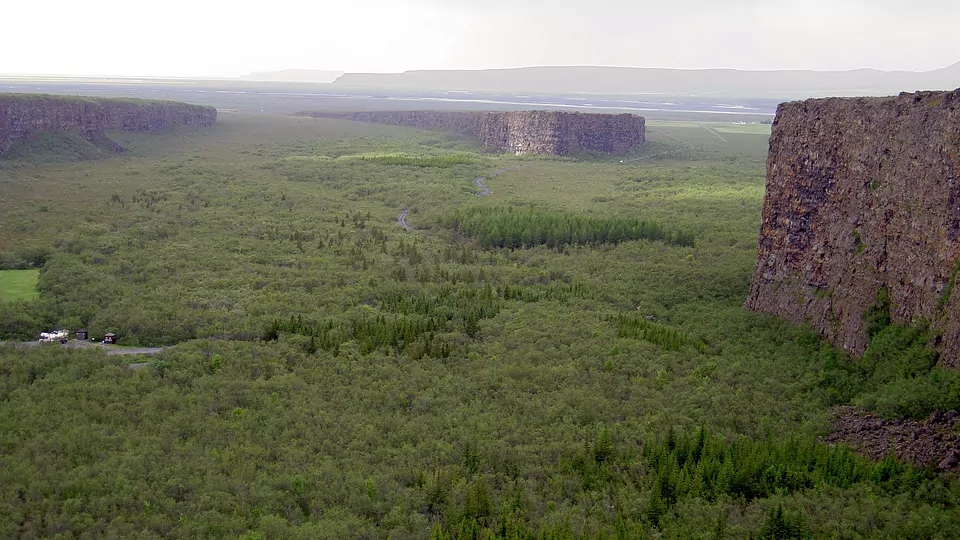
Next: Asbyrgi — narrated, and free to walk into.