Skaftafell: A glacial oasis defined by volcanic history and tectonic scale
Skaftafell
Weather
Local Time
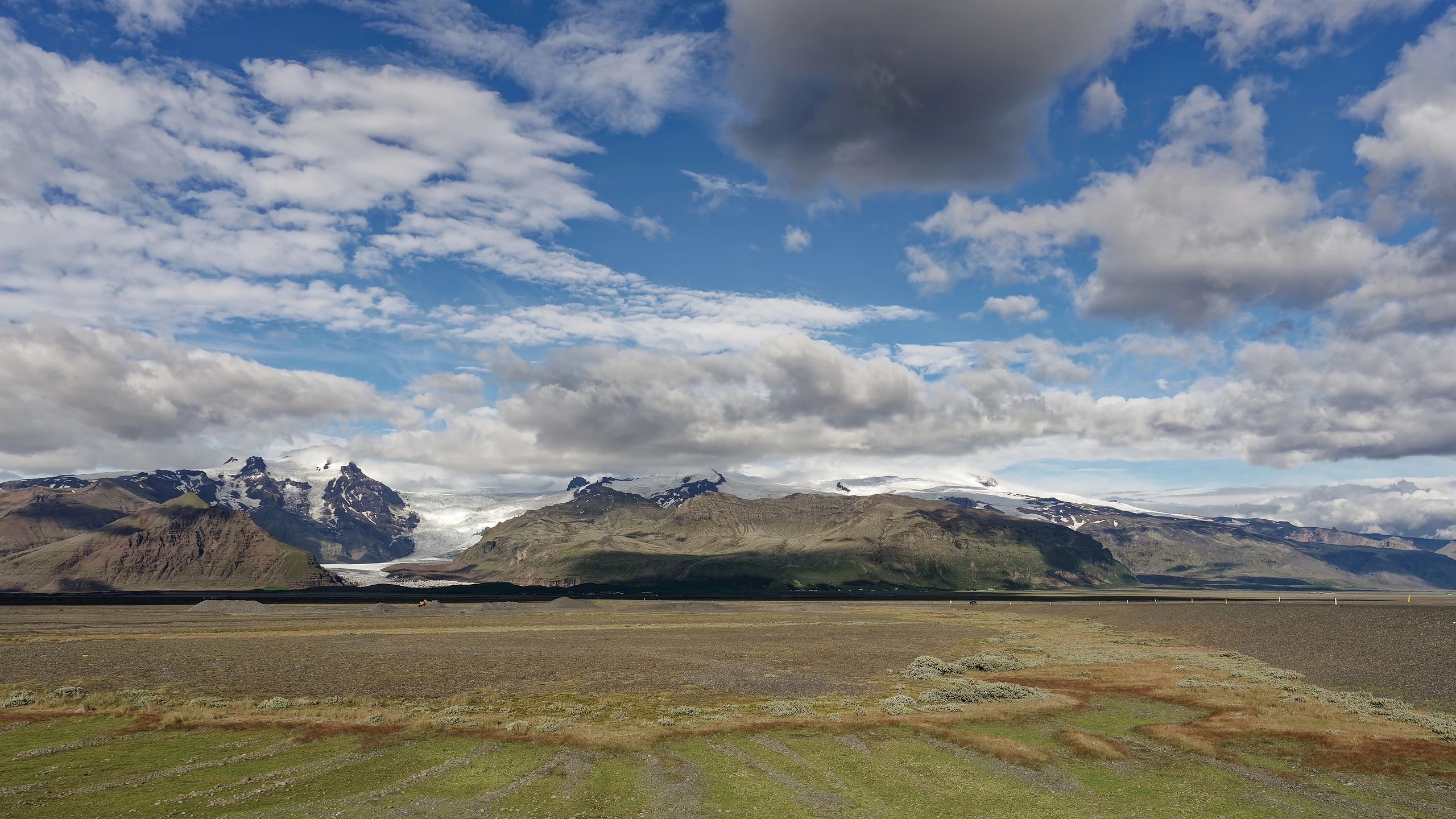
A wilderness area in Southeast Iceland where lush birch forests meet the massive outlet glaciers of the Vatnajokull ice cap.
In Vatnajökull National park
Scenic nature, favourable weather conditions and a network of hiking trails make Skaftafell an ideal destination to enjoy outdoor activities in Icelandic nature. Skaftafell is also the perfect base camp for those who seek to climb Iceland's highest mountain peak, Hvannadalshnúkur. Skaftafell, a dramatic wilderness area in Southeast Iceland, is a place where the primal forces of the Earth are not just visible but visceral. Once a standalone national park and now a crown jewel of the sprawling Vatnajökull National Park, it sits at the foot of Europe’s largest ice cap. For most travelers, Skaftafell is the ultimate "alpine oasis"—a patch of lush birch forest and delicate wildflowers sandwiched between the sterile black sands of the coast and the crushing weight of glacial ice. The Geological Drama The landscape of Skaftafell is defined by a relentless tug-of-war between fire and ice. To the north sits Vatnajökull, which feeds several massive outlet glaciers that flow toward the sea like frozen rivers. The most prominent of these are Skaftafellsjökull and Svínafellsjökull. These glaciers are dynamic, living entities that have carved deep U-shaped valleys into the dark basaltic rock over millennia. The area is also home to Öræfajökull, Iceland’s largest active volcano, which holds the country’s highest peak, Hvannadalshnúkur (2,110 meters). This creates a geography of extremes: you can stand in a green meadow and look up at a vertical wall of ice and rock that rivals the Himalayas in sheer vertical rise. What People Often Comment About If you read any travel forum or blog about Skaftafell, three things dominate the conversation: Svartifoss, Glacier Hiking, and the "Microclimate." 1. Svartifoss (The Black Fall): Almost every visitor makes the 45-minute uphill trek to Svartifoss. People often comment on its "architectural" look. The waterfall drops 20 meters over a semicircular cliff of pitch-black, hexagonal basalt columns. These pillars formed by the incredibly slow cooling of lava, and their geometric perfection is so striking that it famously inspired the design of the Hallgrímskirkja church in Reykjavík. Visitors often remark that it looks man-made, like a pipe organ carved from stone. 2. The "Easy" Glacier Access: Skaftafell is the primary hub for glacier trekking in Iceland. People frequently comment on how accessible the ice feels. You can walk from the visitor center to the snout of Skaftafellsjökull in 20 minutes. Most guided tours take travelers onto the ice here, and the common refrain is one of disbelief at the deep blue color of the crevasses and the sheer scale of the "ice waves." 3. The Unexpected Greenery: Coming from the barren, wind-swept plains of the south, travelers are often shocked by how "un-Icelandic" the flora feels. Because the mountains of Skaftafell act as a shield against the harsh northern winds, the area enjoys a mild microclimate. People often comment on the beauty of the Bæjarstaðarskógur birch woods, which turn a fiery orange in autumn, providing a surreal contrast to the blue glacial ice in the background. What is True, But Rarely Mentioned While the "Instagrammable" spots get all the glory, there are deeper truths about Skaftafell that often go unremarked by the casual tourist. 1. It is a "Wasteland" by Definition: The region surrounding Skaftafell is known as Öræfi. Today, we see it as a beautiful park, but for centuries, the name meant "The Wasteland." After a catastrophic eruption of Öræfajökull in 1362, the entire district was decimated by floods and ash. It was so abandoned and dangerous that it earned this bleak title. When you stand at the viewpoint of Sjónarnípa, you aren't just looking at scenery; you are looking at a graveyard of ancient farms buried under meters of glacial silt. 2. The "Dirty" Glacier Truth: Photos of glaciers often show pristine white and blue ice. In reality, visitors are often surprised (and sometimes disappointed) to find the glaciers at Skaftafell covered in black grit. This isn't pollution; it's volcanic ash and moraine debris. What is rarely discussed is that this "dirt" actually protects the glacier to some extent by insulating it, though as the climate warms, the thinning ice is revealing more of this dark debris, which in turn absorbs more sunlight and accelerates melting—a vicious cycle of "dark snow" dynamics. 3. The Skeiðarársandur "Invisible" Danger: To reach Skaftafell, you must drive across the Skeiðarársandur, a vast black sand plain. While people comment on the view, they rarely realize they are driving over a geological ticking time bomb. This plain is the primary path for jökulhlaups (glacial outburst floods). When a volcano erupts under the ice, billions of tons of water can be released in minutes. The 1996 flood destroyed the Ring Road here, tossing massive steel bridge girders around like toothpicks. Those twisted girders are still visible by the side of the road today—a quiet reminder that the ground you are standing on is temporary. 4. The History of Extreme Isolation: Before the Ring Road was completed in 1974, Skaftafell was one of the most isolated places in the developed world. The glacial rivers were so powerful and unpredictable that they couldn't be bridged. For nearly a millennium, the farmers of Skaftafell lived in a world where "going to town" meant a dangerous multi-day journey over glaciers or through treacherous surf. The turf houses at Sel (near Svartifoss) aren't just "cute" historical buildings; they are monuments to a level of self-sufficiency that is almost unimaginable today. The Experience of the "High" Trails While most people stick to the lower loops, the true spirit of Skaftafell is found on the higher trails like Kristínartindar. From these peaks, you can see the curvature of the Earth over the Atlantic and the seemingly infinite expanse of the Vatnajökull ice cap. It is a place of profound silence. On a windless day, the only sound is the distant, thunderous "crack" of the glacier calving—a sound that carries for miles and reminds you that the "frozen" landscape is actually in constant, violent motion. Conclusion Skaftafell is a place of contradictions. It is a lush oasis born from volcanic destruction. It is a "wasteland" that has become a sanctuary. While people will always talk about the beauty of Svartifoss or the thrill of a glacier hike, the deeper truth of Skaftafell lies in its resilience. It is a landscape that has survived fire, ice, and total isolation, emerging as a testament to the raw, unyielding beauty of the North.Where to go next
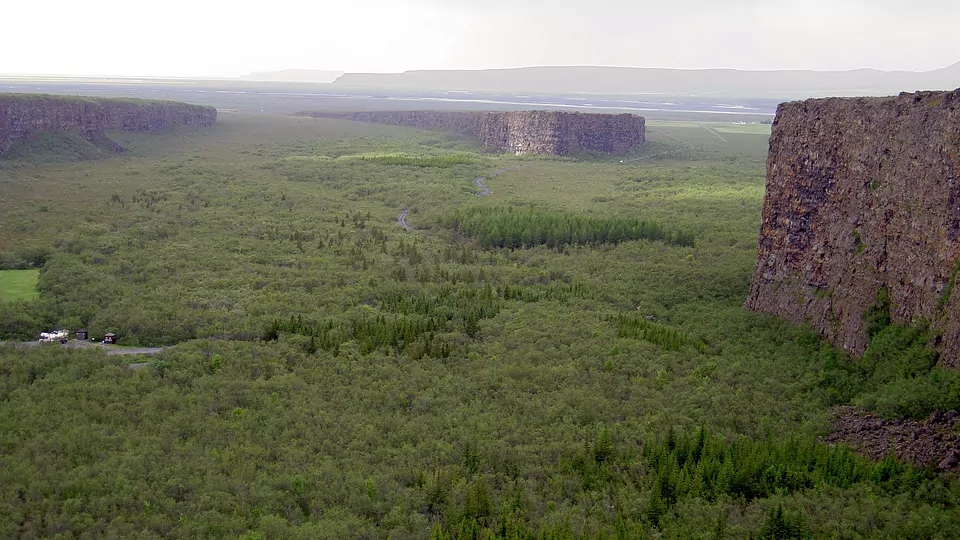
Next: Asbyrgi — 506 km, 417 minutes from Skaftafell, narrated.