Jokulsarlon: Dynamics of the glacier lagoon and Diamond Beach
Jokulsarlon
Weather
Local Time
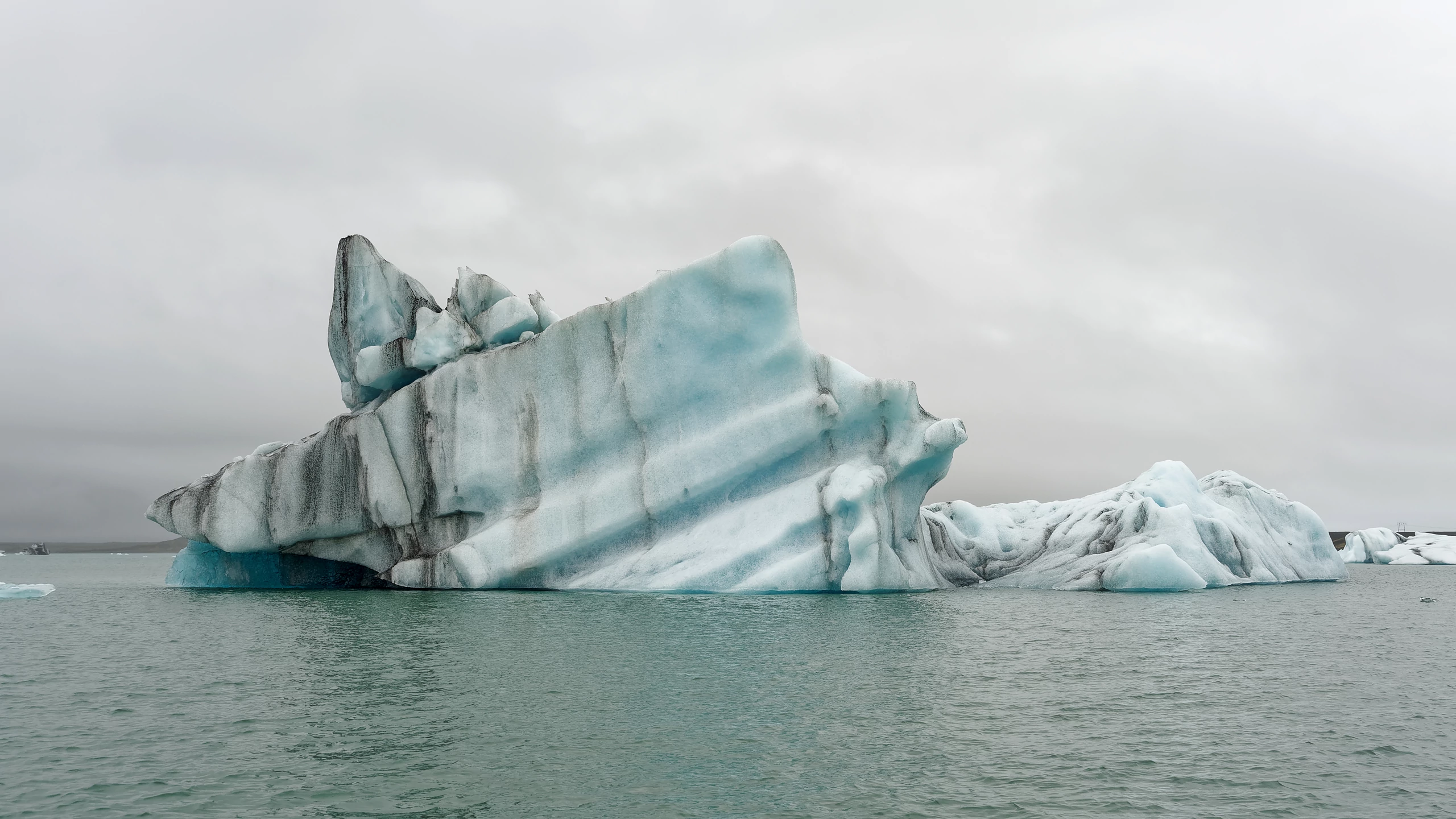
Jokulsarlon is a tidal lagoon where massive icebergs drift from the Breidamerkurjokull glacier toward the sea, creating the famous ice-strewn Diamond Beach.
One of Iceland's major attraction
Jökulsárlón is a glacial lagoon which still blue waters are a sight not to be missed, as it is dotted with the icebergs from the edge of Breiðamerkurjökull. The lagoon flows through a narrow gateway into the Atlantic Ocean, leaving the spectacular sight of the large chunks of ice on the black sandy beach. Jökulsárlón, the "Glacier Lagoon" in Southeast Iceland, is arguably the most famous natural wonder in the country. It is a surreal graveyard of ice, where massive bergs break away from the Breiðamerkurjökull glacier and float serenely toward the Atlantic Ocean. While it appears as an ancient, primordial landscape, it is actually one of Iceland's youngest landmarks—a beautiful byproduct of a warming planet. The Birth of a Lagoon Until the early 20th century, the Breiðamerkurjökull glacier reached all the way to the Ring Road. There was no lagoon; only a massive wall of ice meeting the land. As the climate began to warm in the 1920s and 30s, the glacier started to retreat, leaving a deep gorge in the earth that filled with meltwater and seawater. Today, Jökulsárlón is the deepest lake in Iceland, reaching depths of over 248 meters (814 feet). It is a tidal lagoon, meaning the salty seawater flows in with the tides, preventing the lake from freezing solid and creating a unique brackish ecosystem that supports a wealth of life. What People Often Comment About When travelers arrive at Jökulsárlón, their reactions tend to center on three specific phenomena: The Colors, The Seals, and The Diamond Beach. 1. The "Electric" Blue Ice: The most frequent comment from visitors is about the color of the ice. People often assume the deep, glowing blue is a photographic trick, but in person, it is even more vivid. This happens because the ice is "old ice"—compressed so tightly over centuries that all air bubbles have been squeezed out. Without air to scatter light, the ice absorbs every color of the spectrum except blue, which reflects back to the eye. Visitors also notice black streaks in the ice, which many correctly identify as volcanic ash from eruptions centuries ago, trapped like a timeline within the frozen water. 2. The Playful Seals: Jökulsárlón is a haven for Harbor Seals. Visitors often comment on how they look like small, shiny bobbing heads among the bergs. Because the lagoon is rich in herring, trout, and salmon brought in by the tide, the seals have a permanent buffet. They are frequently seen lounging on the icebergs, seemingly posing for the boat tours that weave through the lagoon. 3. The Diamond Beach (Breiðamerkursandur): Almost every visitor follows the water under the bridge to the shoreline. People comment on the "diamonds"—chunks of crystal-clear ice that have washed up on the jet-black volcanic sand after being spat out by the lagoon. The contrast between the translucent ice and the ink-black beach is perhaps the most photographed sight in Iceland. What is True, But Not Often Mentioned While the beauty of the lagoon is well-documented, there are several "invisible" truths about Jökulsárlón that are rarely discussed in travel brochures. 1. It is an "Accidental" Masterpiece: Jökulsárlón is a visual triumph, but geologically, it is a scar. It is a direct result of rapid glacial retreat. While we admire its beauty, scientists view it as a measurement of loss. The lagoon has doubled in size in the last 15 years alone. If the current rate of melting continues, the glacier will eventually retreat so far that the lagoon will simply become a deep fjord, and the "iceberg" era of Jökulsárlón will come to an end. 2. The Extreme Danger of the "Iceberg Flip": Visitors often see a massive iceberg and think it looks like a stable island. People have famously (and dangerously) tried to climb onto them for photos. What is rarely mentioned is that icebergs are inherently unstable. Because 90% of an iceberg is underwater, its center of gravity is constantly shifting as it melts. An iceberg can flip 180 degrees in a split second with enough force to crush a boat or create a localized "mini-tsunami" that can sweep a person off the shore. 3. The Bridge is a Feat of Desperation: The bridge that carries the Ring Road over the lagoon's outlet is one of the most vital pieces of infrastructure in Iceland. What isn't often mentioned is how precarious its position is. The narrow strip of land separating the lagoon from the sea is eroding rapidly. Engineers have to constantly reinforce the bridge's foundations because the "river" (Jökulsá) flowing out of the lagoon is incredibly powerful. There is a very real possibility that in the coming decades, the sea will reclaim the lagoon entirely, necessitating a massive rerouting of Iceland’s main highway. 4. It’s a Hollywood Regular: While people know it’s famous, they often don’t realize just how many times they’ve seen it on screen. Jökulsárlón has "played" various locations in cinema: it was Siberia in the James Bond film A View to a Kill, the icy wastes of Die Another Day, a frozen planet in Interstellar, and a backdrop for Lara Croft: Tomb Raider. Because it is so accessible compared to the Arctic or Antarctic, it is the world’s "stunt double" for the poles. 5. The "Silent" Noise: People expect a place of ice to be silent, but Jökulsárlón is actually quite noisy. If you stand still on a quiet day, you will hear a constant popping and crackling sound. This is known as "Bergie Seltzer." It is the sound of ancient air bubbles, trapped under immense pressure for hundreds of years, finally being released as the ice melts. It is the literal "breath" of the Viking age escaping into the modern atmosphere. The Lifecycle of a "Diamond" The journey of a single iceberg is a slow-motion drama. It may take several years for a piece of ice to float from the glacier’s edge to the sea. It gets stuck on the shallow bottom of the lagoon, melts a little, floats further, and gets stuck again. Once it finally clears the bridge and hits the Atlantic, the waves batter it and polish it into the smooth, clear "diamonds" seen on the beach. It is a process of refinement through destruction. Conclusion Jökulsárlón is a place of profound, haunting beauty, but it is also a landscape in transition. It is a reminder that the Earth is not static. Every time you visit, you are seeing a version of the lagoon that has never existed before and will never exist again. The icebergs you see today will be water by tomorrow, replaced by "new" ancient ice falling from the heights of Vatnajökull. It is a fleeting, magnificent spectacle that captures both the majesty of the natural world and its heartbreaking fragility.Where to go next
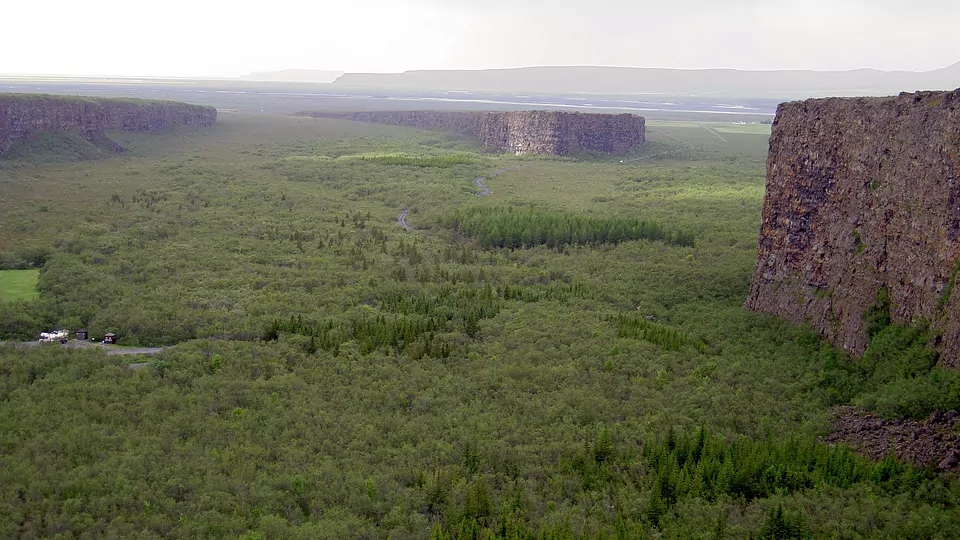
Next: Asbyrgi — narrated, and free to walk into.