Námafjall: A high-temperature descent into Iceland’s volcanic engine
Námafjall
Weather
Local Time
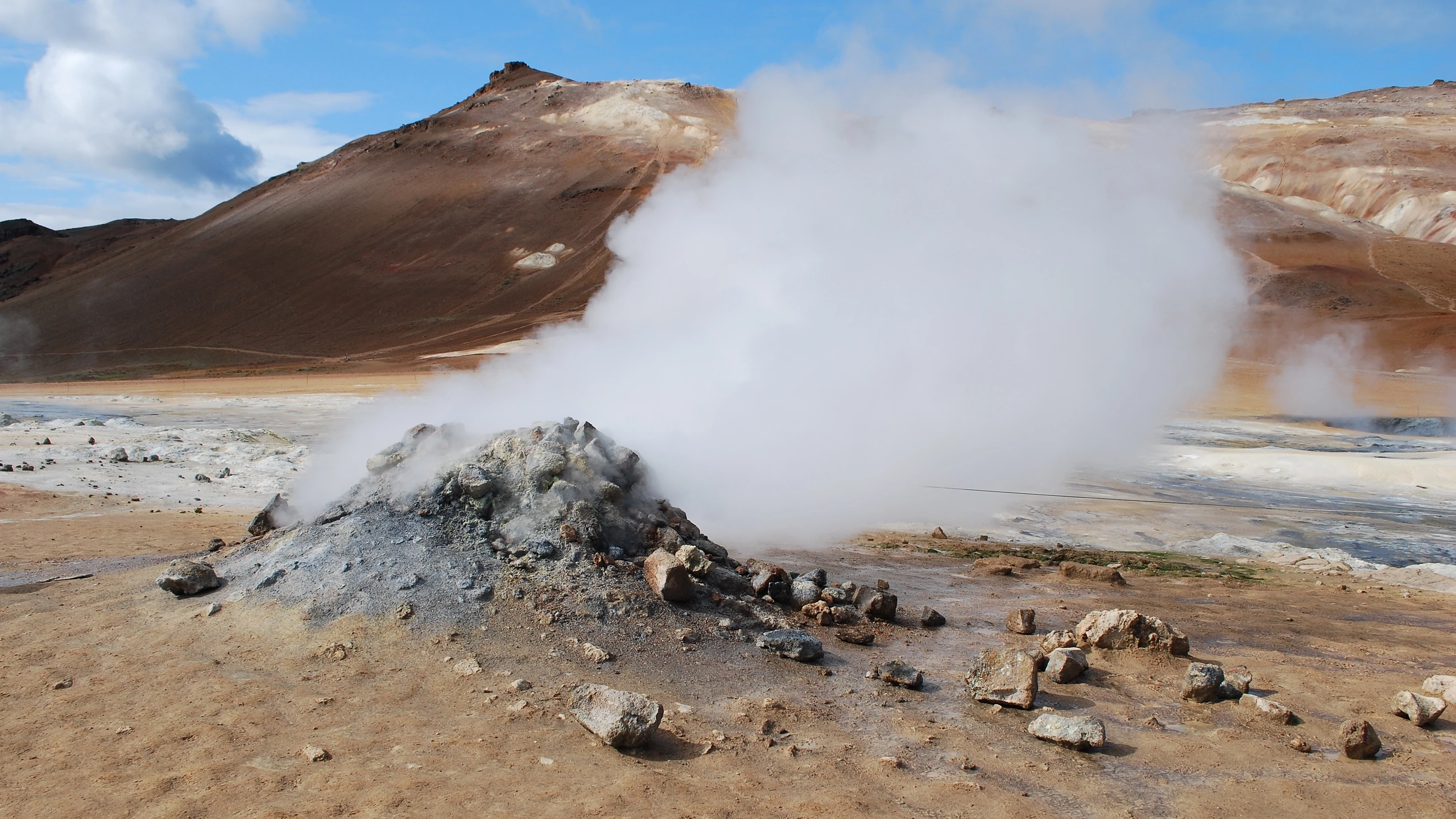
Namafjall and the Hverir geothermal field offer a raw encounter with the earth’s interior, where boiling mud pots and pressurized steam vents redefine the Icelandic landscape.
Námafjall and the adjacent geothermal area of Hverir (often collectively referred to as Hverarönd) represent one of the most otherworldly and visceral landscapes in Iceland. Located on the eastern side of Lake Mývatn, just off the Ring Road, this site serves as a raw, unfiltered window into the volcanic engine that drives the island. Here, the Earth’s crust is remarkably thin, and the proximity to the magma chambers of the Krafla volcanic system creates a high-temperature geothermal field that feels more like the surface of a distant planet than a terrestrial mountain range.
The Sensory Assault: Sight, Sound, and Smell
To visit Hverir is to engage in a complete sensory experience. The most immediate sensation is the smell—a thick, pungent aroma of sulfur (hydrogen sulfide) that many travelers liken to rotting eggs. This gas is a byproduct of the boiling volcanic water beneath the surface, and it serves as a constant reminder of the chemical reactions occurring beneath your feet.
Visually, the landscape is a kaleidoscope of mineral colors. Because the high acidity of the geothermal water has stripped the soil of most organic life, the area is a barren wasteland of ochre, rust-red, sulfur-yellow, and pale grey. There is no green to be found; instead, the ground is a patchwork of mineral deposits and colorful mud. Steam rises in thick, white plumes from every crack in the earth, sometimes obscuring the path ahead and adding to the eerie, post-apocalyptic atmosphere.
The soundtrack of Hverir is equally striking. Unlike the roaring waterfalls of the south, the noise here is a rhythmic, guttural gurgle. The large mud pots, known as solfataras, boil constantly, throwing thick, grey slurry into the air with a heavy, wet "thwack." Nearby, high-pressure steam vents, or fumaroles, hiss with the intensity of a jet engine, releasing built-up pressure from the deep reservoirs below.
Geological Mechanics
Námafjall sits on the Mid-Atlantic Ridge, the divergent plate boundary where the North American and Eurasian tectonic plates are slowly pulling apart. This tectonic activity creates fissures that allow groundwater to seep deep into the crust. As this water nears the magma chamber of the Krafla volcano, it is superheated to temperatures exceeding 200°C (392°F).
Because the water is under immense pressure, it doesn't boil until it nears the surface. As it rises, it dissolves minerals from the surrounding rock, carrying them upward. When the water finally erupts as steam or boiling mud, these minerals—primarily sulfur, gypsum, and silica—precipitate out, creating the vivid yellow and white crusts that define the area. The high acidity of the water breaks down the volcanic rock into fine silicate clay, which creates the thick, grey mud seen in the pits.
The Legend of the "Kitchen"
Historically, the sulfur at Námafjall was a valuable commodity. In the Middle Ages and up through the 19th century, sulfur was mined here and exported to Europe for the production of gunpowder. The King of Denmark even held a monopoly on the mining rights at one point.
The most famous feature of the area is arguably the "Steaming Piles"—cairns of rocks that have been built over steam vents. These were originally constructed by locals to concentrate the steam, and they act as natural vents. Some of the larger fumaroles are so powerful that they have been known to "roar" for decades without ceasing. One specific area near the base of the mountain is nicknamed "The Kitchen" (Eldhúsið) because of the constant boiling and steaming that mimics a giant, subterranean stovetop.
Hiking Námafjall Ridge
While the Hverir mud pots are located at the base of the mountain and are easily accessible via flat paths, the more adventurous visitor should hike the ridge of Námafjall mountain itself.
A steep, winding trail leads from the parking lot to the crest of the ridge. The climb is short but intense, and the ground can be slippery due to the damp clay and loose volcanic scree. Once you reach the top, the reward is one of the most spectacular panoramas in North Iceland. To the west, you can see the shimmering blue waters of Lake Mývatn and the perfectly symmetrical crater of Hverfjall. To the north lies the Krafla caldera and the steaming pipes of the Bjarnarflag power station.
Standing on the ridge, you are positioned directly above the geothermal vents. The ground beneath your boots is often warm to the touch, and steam drifts up through cracks in the ridge, creating the sensation that you are walking on the back of a sleeping dragon.
Safety and Conservation
Hverir is a delicate and dangerous environment. The mud in the pots is boiling, and the crust surrounding them can be "false"—a thin layer of mineral deposits that looks solid but hides a pool of scalding slurry underneath. It is vital to stay within the marked rope barriers at all times. The soil is also highly acidic and can damage footwear and clothing.
Furthermore, the area is a protected site. The colorful mineral crusts take centuries to form and are easily crushed by footsteps. By staying on the designated paths, visitors help preserve the "alien" aesthetic of the landscape for future generations.
Practical Tips for Visitors
Clothing: Wear old shoes or boots. The grey clay at Hverir is incredibly sticky and contains minerals that can stain fabrics permanently. A windproof jacket is also essential, as the ridge can be extremely gusty.
Timing: Hverir is a popular stop for tour buses. To experience the area in silence—which enhances the "otherworldly" feel—visit early in the morning or during the late-night Golden Hour in summer.
Photography: The steam provides excellent depth for photos, but be careful of your camera gear; the sulfuric steam can be corrosive to electronics if you linger too long in a thick plume.
Námafjall/Hverir is a place that highlights the raw, creative, and destructive power of the Earth. It is not "pretty" in a traditional sense, but it is undeniably magnificent, offering a visceral connection to the geological forces that continue to shape Iceland every single day.
Where to go next
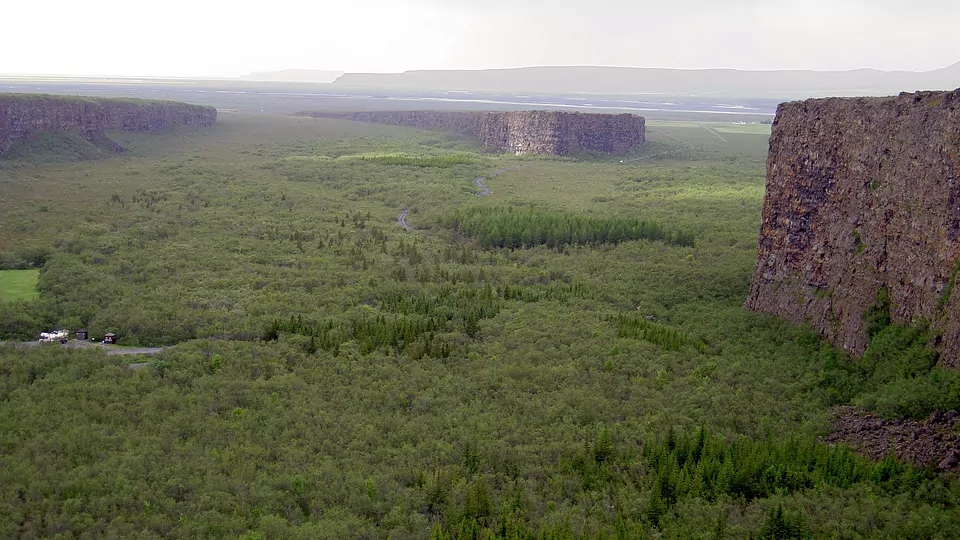
Next: Asbyrgi — narrated, and free to walk into.