Snaefellsjokull Glacier: The ice-capped sentinel of the Snaefellsnes Peninsula
Snaefellsjokull Glacier
Weather
Local Time
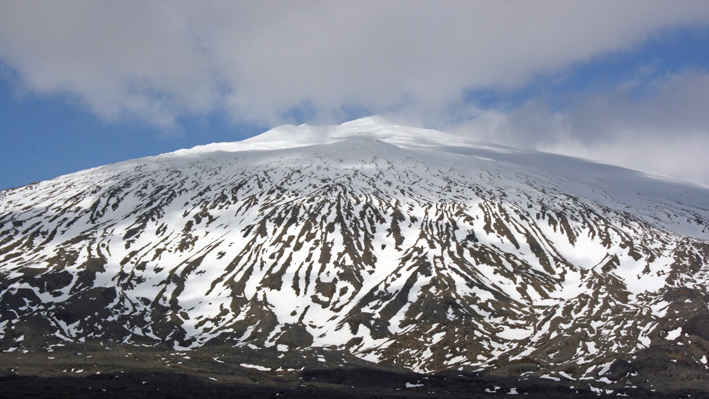
A crown of ice atop an ancient stratovolcano, Snaefellsjokull is a landmark of literary legend, spiritual mystery, and profound geological power.
The Snæfellsjökull glacier at Snaefellsnes peninsula is 1446m above sea level. The glacier is an active volcano, having been built up through numerous eruptions during the last 800,000 years. Many believe the glacier to be one of the seven main energy centres of the earth and its mystique is noticed by many. The glacier plays big role as the Center of the Earth in the novel Journey to the Center of the Earth (1864) by Jules Verne. Snæfellsjökull is a part of the Snæfellsjökull National Park which was established on June 28, 2001. The Park's purpose is to protect and conserve the areas unique landscape, indigenous plant and animal life as well as important historical relics. At the same time, the Park is meant to allow visitors easier as well as improved opportunities to get to know the area. Driving on the Glacier is prohibited except with a permission from the park ranger.
Snæfellsjökull (meaning "Snowy Mountain Glacier") is a glacier-capped stratovolcano located at the westernmost tip of the Snæfellsnes Peninsula in West Iceland. It is the crowning jewel of Snæfellsjökull National Park and stands as one of the country's most iconic and mystical landmarks.
Iceland Travel
Iceland Travel
+2
Visiting Snaefellsjokull Glacier in Iceland
Expedition on Snæfellsjökull Glacier | Guide to Iceland
1. Literary and Cultural Fame
Entrance to the Earth: The glacier gained worldwide fame from Jules Verne's 1864 novel, Journey to the Center of the Earth, where its summit serves as the gateway to a subterranean world.
Spiritual Energy: Many believe it to be one of the world's seven major "energy centers" or chakra points. It has long attracted paranormal enthusiasts and even prompted a gathering in 1993 to welcome a predicted alien landing (which did not occur).
Guardian Spirit: According to the Bárðar saga Snæfellsáss, a half-troll named Bárður became the guardian spirit of the glacier and is said to still reside within its ice and caves.
Guide to Iceland
Guide to Iceland
+3
2. Geological Highlights
Active Volcano: Beneath the ice lies a 700,000-year-old stratovolcano. While it is still considered active, its last major eruption occurred approximately 1,800 years ago (around 200 AD).
Height and Visibility: Its peak reaches 1,446 meters (4,744 ft). On a clear day, the shimmering ice cap is famously visible from Reykjavík across the Faxaflói Bay, nearly 120 km away.
Climate Change: In August 2012, for the first time in recorded history, the summit became completely free of snow and ice, a stark indicator of the glacier's rapid retreat.
Perlan
Perlan
+3
3. Key Nearby Attractions
The area surrounding the glacier is often called "Iceland in Miniature" because it contains examples of almost every type of Icelandic landscape in a small area.
Guide to Iceland
Guide to Iceland
+1
Attraction Type Description
Djúpalónssandur Black Beach A beach of smooth black pebbles featuring historic "lifting stones" used by fishermen.
Arnarstapi & Hellnar Fishing Villages Quaint coastal hamlets connected by a spectacular 2.5 km cliffside hiking trail.
Lóndrangar Basalt Cliffs Two massive rock pinnacles (75m and 61m) that are remnants of an ancient volcanic crater.
Vatnshellir Lava Cave An 8,000-year-old lava tube that visitors can explore via a guided spiral staircase tour.
4. Visiting & Accessibility
Distance: Approximately 2.5 to 3 hours driving from Reykjavík.
Tours: While you can drive around its base on Route 574, you should only venture onto the glacier with a certified guide. Popular options include Glacier Hiking or Snowcat Tours.
Best Time: Summer (June–August) offers the best hiking conditions and stable weather, though the park is open year-round
Snæfellsjökull National Park is located at the edge of Snæfellsnes in the West part of the country. It is about 170 km2 and the first national park to stretch from the top of the mountain and all the way down to the ocean. The Park is open all year long. The Visitor center is at Malarrif. The park´s information center has a very interesting exhibition of nature and fishing station remains. We aim to appeal to all ages. See a map of the area in 3-D . Snaefellsjokull National Park
Snæfellsjökull National Park is located at the edge of Snæfellsnes in the West part of the country. It is about 170 km2 and the first national park to stretch from the top of the mountain and all the way down to the ocean. The Park is open all year long. The Visitor center is at Malarrif. The park´s information center has a very interesting exhibition of nature and fishing station remains. We aim to appeal to all ages. See a map of the area in 3-D . Snaefellsjokull National Park
The king of Iceland’s Mountains
The Snaefellsjokull glacier is 1446m above sea level. The glacier is an active volcano, having been built up through numerous eruptions during the last 800,000 years. Many believe the glacier to be one of the seven main energy centres of the earth and its mystique is noticed by many.Where to go next
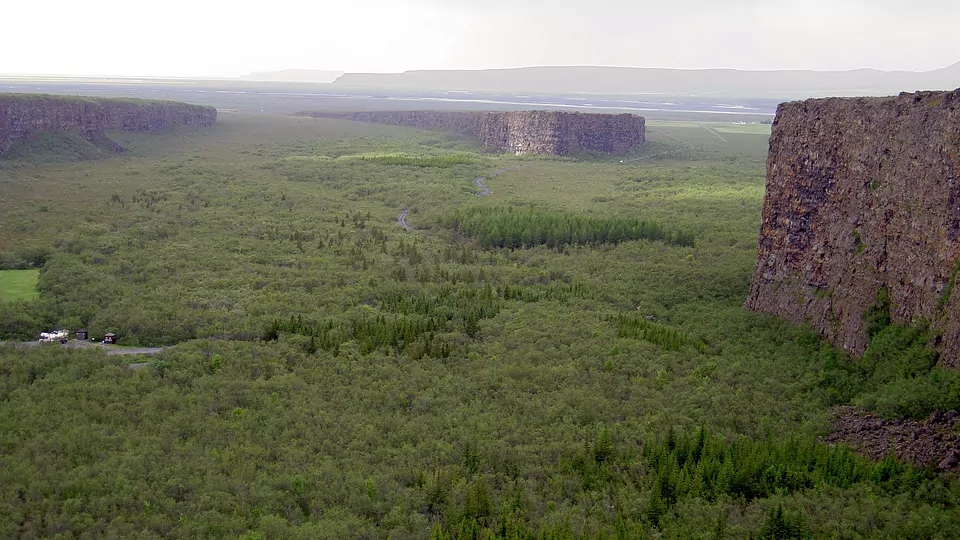
Next: Asbyrgi — narrated, and free to walk into.