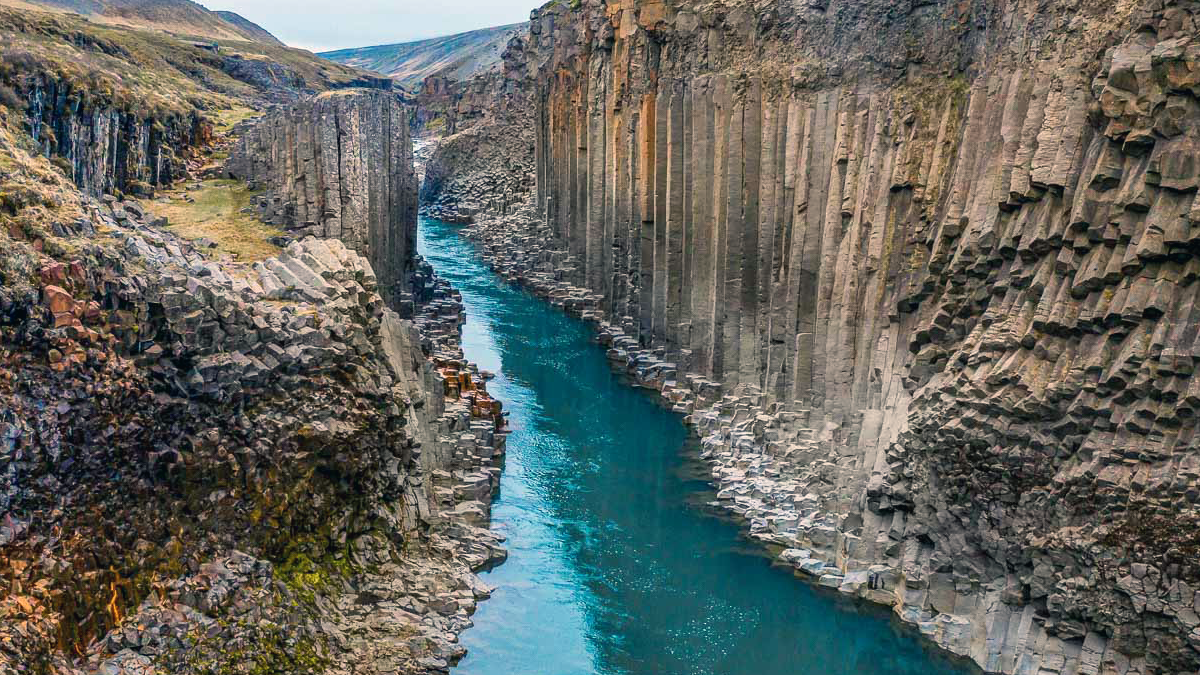
Once hidden beneath the silty depths of a powerful glacial river, Studlagil has emerged as one of Iceland's most striking geological displays of basalt columns and shifting turquoise waters.
Stuðlagil is a unique basalt canyon located in Efri-Jökuldalur in Fljótsdalshérað, which in recent years has established itself as one of the most exciting destinations in East Iceland. For the longest time, Stuðlagil canyon was mostly hidden by a powerful glacial river called Jökulsá á Dal (referred to as Jökla by locals). It wasn’t properly discovered until after the Káranhjúkar hydro-dam was put in use and the Hálslón reservoir started to fill, making Jökla’s water levels drop and revealing the stunning basalt columns of Stuðlagil canyon. Jökla is one of the longest glacial rivers in Iceland, spanning a total of 150 kms from Vatnajökull glacier to Héraðssandar beach. Entering Jökla, or other glacial rivers, is extremely dangerous and forbidden as they are very powerful, and their currents are not always visible on the surface. Stuðlagil canyon boasts one of the country’s largest and most beautiful basalt formations and is exceptionally graphic, especially when Jökla’s glacial water is clear. The bluish-green colour of the water, which contrasts beautifully with the colourful basalt columns, really is a sight to behold. As is with glacial rivers, its colour and water flow change depending on the season. Come spring and snow start to thaw, and the Hálslón reservoir is overflowing, the river takes on a grey-brown colour. Overflow is most common from the beginning of August until October – but can occur at other times too. You can monitor the water level of the reservoir at any time. Stuðlagil canyon is a fantastic destination no matter the season, and no one should leave Austurland without visiting, even if only for a short time! Stuðlagil canyon is located roughly 52 kilometres (about an hour’s drive) from Egilsstaðir. If you’re visiting from the North, it will take around an hour and a half to drive from lake Mývatn. When leaving Route one (the Ringroad) towards Stuðlagil canyon, you’ll be driving on a gravel road (923). Although gravel, the road is accessible to all cars and is open all year round. Keep in mind if visiting during wintertime that, weather and road conditions can change in a matter of minutes. You can access Stuðlagil canyon via two routes: Stuðlagil observation platform Driving north on Highway 1 from Egilsstaðir, leading you through Jökuldalur, take the exit down route 923, just beyond Skjöldólfsstaðir. From there, it is about a 19 km drive on a gravel road to the farm Grund which stands on the northern side of Stuðlagil canyon. There you’ll find parking, toilets and safe access to an observation platform located at the top of the canyon – only a few minutes by foot from the parking lot. If you wish to enter the canyon, this is not the route for you Note that you cannot get down into the canyon from this side. Stuðlagil hike Driving north on Highway 1 from Egilsstaðir, leading you through Jökuldalur, take the exit down route 923, just beyond Skjöldólfsstaðir. Turn towards the Klaustursel farm after driving roughly 15 kms. By Klaustursel, you’ll find two parking lots, one by the bridge over Jökla (around 10 km hike to Stuðlagil canyon back and forth) and the other by Stuðlafoss waterfall (about 5 km hike to and from Stuðlagil canyon). Stuðlafoss is a majestic waterfall surrounded by towering basalt columns. It truly is a sight, and you won’t find many like it in the world. Standing at the bottom of Stuðlagil canyon is another unique experience to check off your bucket list. Keep in mind when entering the canyon that the rocks might be wet and very slippery. The nature surrounding Stuðlagil canyon is stunning but delicate. Visitors are encouraged to show respect for the area, wildlife and nature and leave it as they found it. From May 1st to June 10th, numerous pink-footed geese nest in the area and, therefore, crucial that guests stay within the marked trails so as not to upset the birds. The area surrounding Stuðlagil canyon is agricultural, so it’s common to see farmers bringing their sheep down from the highlands right before winter hits, which can be an enjoyable experience. In summertime, you can continue your drive through route 923 into the East Iceland Highlands (F-roads are generally only open from around mid-June for a few months, see more here). T here you can get on to The Highland Circle travel route, which will lead you to exciting places such as Kárahnjúkar dam, Laugarfell and down into Fljótsdalur. Note that parts of the way are only accessible for well-prepared 4x4 vehicles. For further information, visit the official Stuðlagil website.
Welcome to the breathtaking Stuðlagil Canyon, a natural masterpiece nestled in the heart of Iceland. Known for its mesmerizing hexagonal basalt columns and the vibrant turquoise river that snakes through its depths, Stuðlagil is a must-visit destination for nature lovers and adventure seekers alike.
With the unique geological formations that have developed over centuries, this hidden treasure will leave you in awe and provide the perfect setting for stunning photographs.
The Formation of Stuðlagil Canyon
Stuðlagil Canyon was formed through a stunning interplay of volcanic activity and glacial erosion. The canyon showcases striking basalt columns that have developed due to the rapid cooling of lava flows. Over time, these columns have weathered to create the impressive formations you see today - perfect octagonal and hexagonal shapes that rise majestically from the canyon floor.
The canyon is also carved by the Jökla River, which winds its way through the landscape, providing a stark contrast to the dark basalt columns with its bright blue hues. This combination of geological wonders and vibrant color makes Stuðlagil a truly unique sight.
Getting to Stuðlagil Canyon
Accessing Stuðlagil Canyon is relatively straightforward, though it does require a bit of travel off the beaten path. The canyon is located in East Iceland, approximately an hour's drive from the nearest town of Egilsstaðir. To reach the canyon itself, visitors can park at a designated area and enjoy a scenic walk that takes around 30 minutes to the viewpoint.
- Make sure to wear sturdy shoes as the terrain can be uneven.
- Be mindful of the weather, as conditions can change rapidly in Iceland.
- Don't forget your camera to capture the stunning scenery!
Best Time to Visit
The best time to visit Stuðlagil Canyon is during the late spring to early autumn months (May to September). This period features milder weather and improved accessibility. During this time, the vibrant colors of the canyon come to life, with lush green surroundings contrasting beautifully against the striking basalt formations. Additionally, autumn can offer a wonderfully unique perspective as the leaves change colors, creating picturesque views.
Safety Tips for Exploring the Canyon
While exploring Stuðlagil Canyon, safety is paramount. Here are some practical tips to keep in mind:
- Stay on marked trails to prevent damaging the delicate ecosystem.
- Wear appropriate clothing for changes in temperature.
- While the canyon's beauty may be tempting, avoid climbing on unstable rocks.
Wrap Up Your Adventure with Additional Activities
After soaking in the stunning views at Stuðlagil Canyon, consider exploring nearby attractions. From hiking scenic trails to visiting the picturesque Dettifoss waterfall, the East Iceland region offers numerous options to make your trip truly unforgettable.
Final Thoughts
The awe-inspiring beauty of Stuðlagil Canyon deserves a spot on every travel itinerary. With its unique geological features, vibrant colors, and accessible trails, this natural wonder is an exceptional destination for anyone looking to experience the best of Iceland’s landscapes. Plan your visit today and prepare to be amazed by the artistry of nature!